
Peak WagyuPeak Wagyu
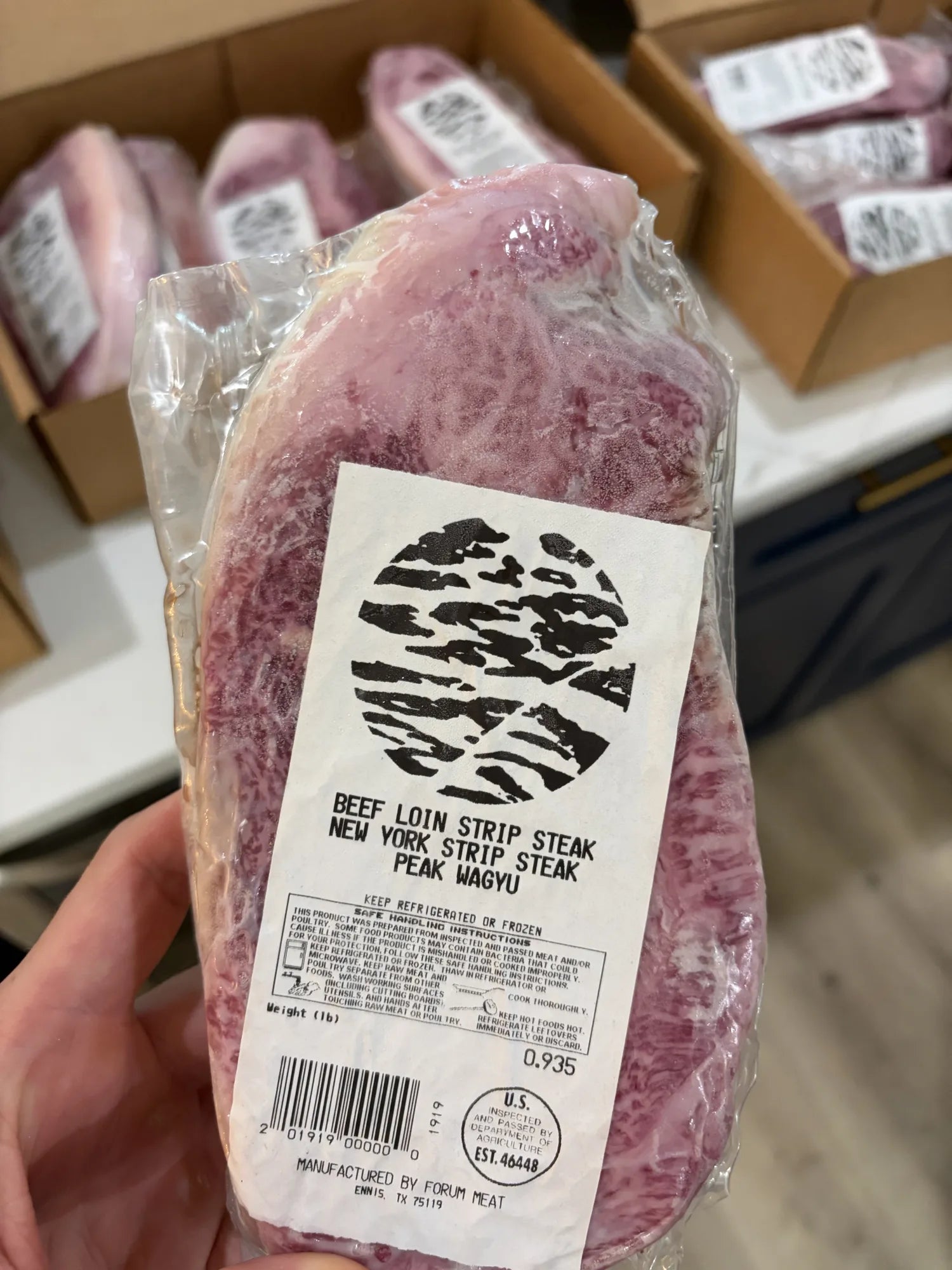
NY strip steak, close up
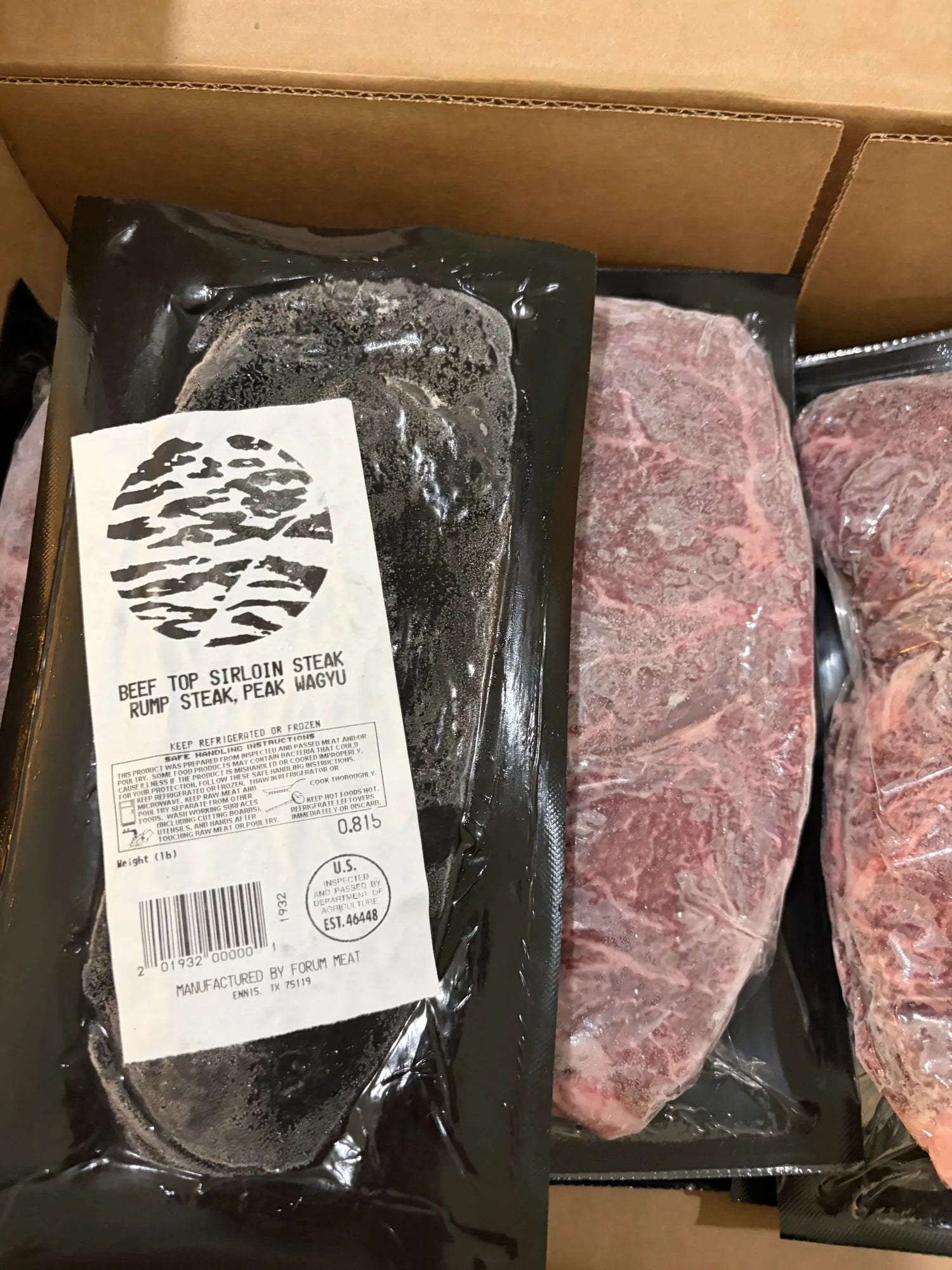
Rump steak, close up
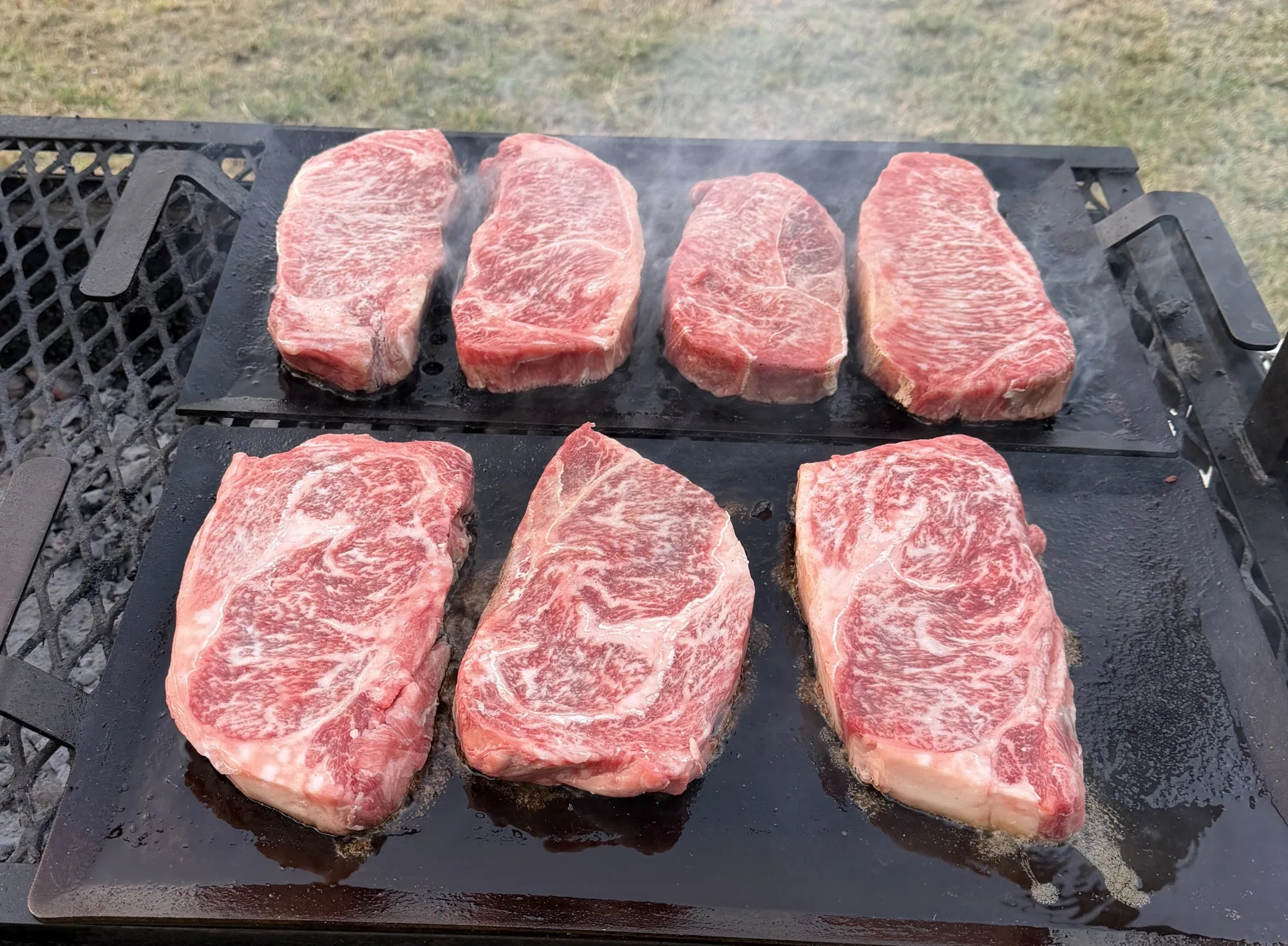
NY strips on the grill, marbling detail
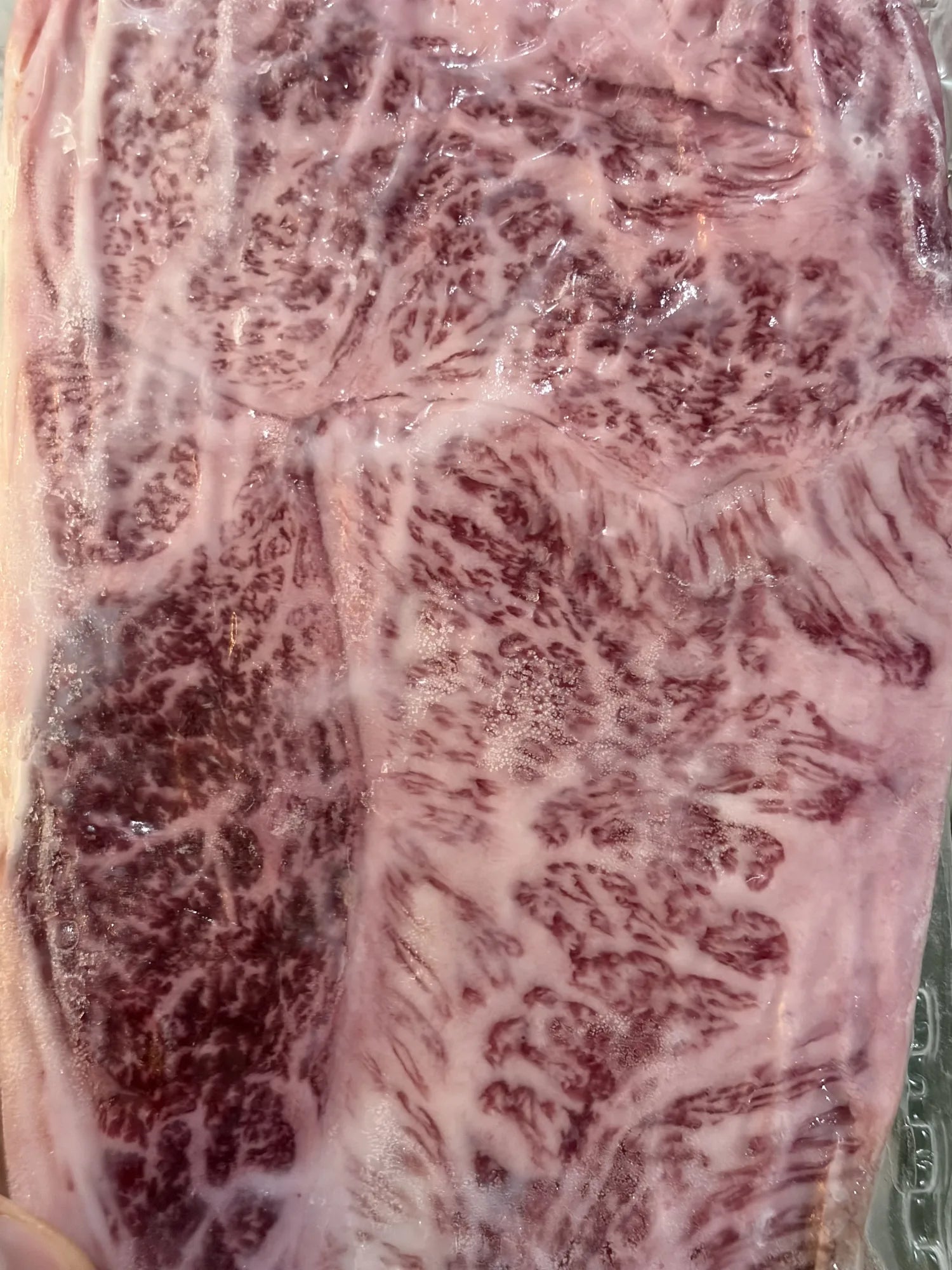
NY strip marbling, close up
NY strips searing on the grill
NY strip flipped, crust and smoke
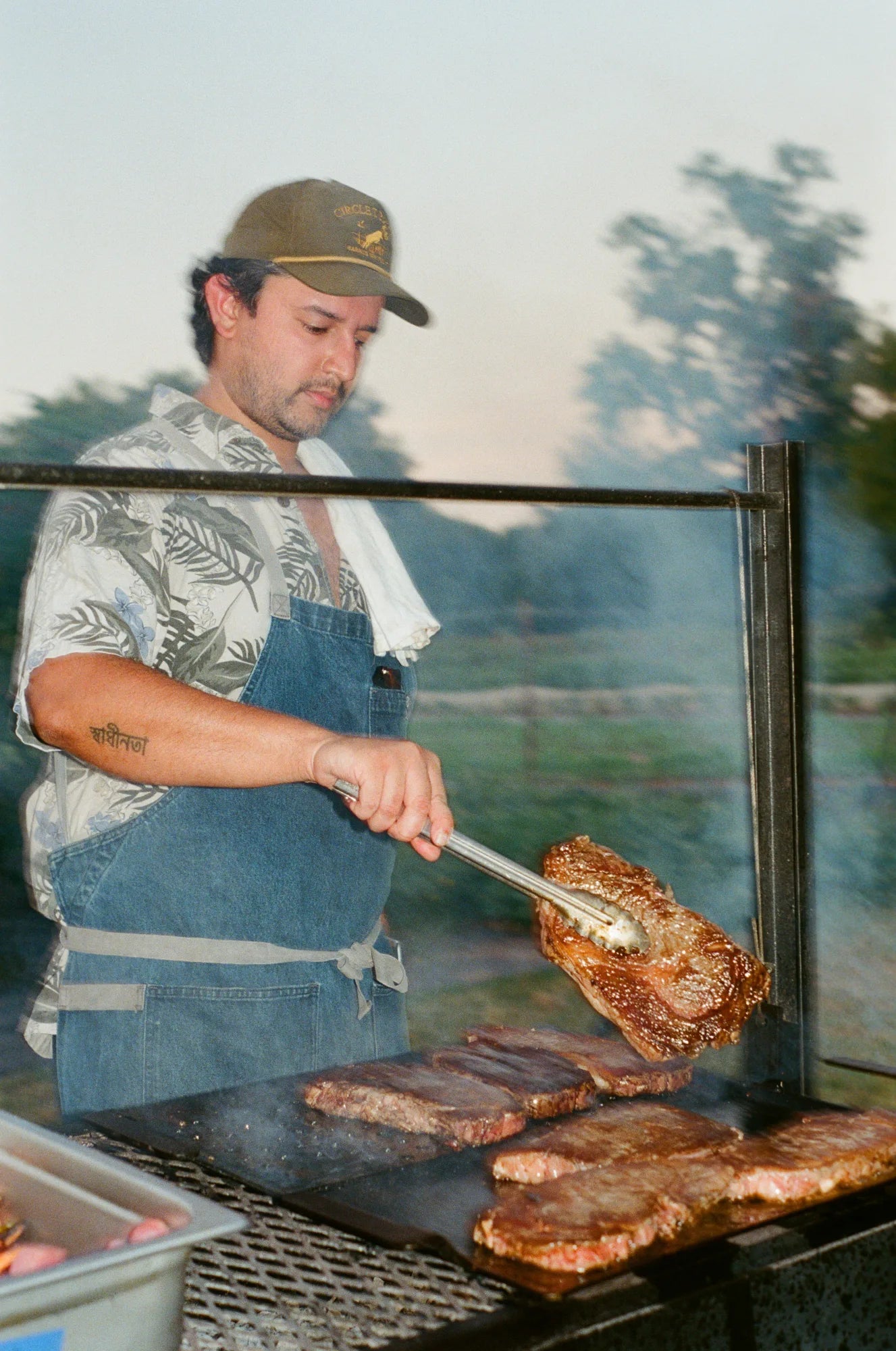
Chef flipping a NY strip through the smoke
NY strip on the grill
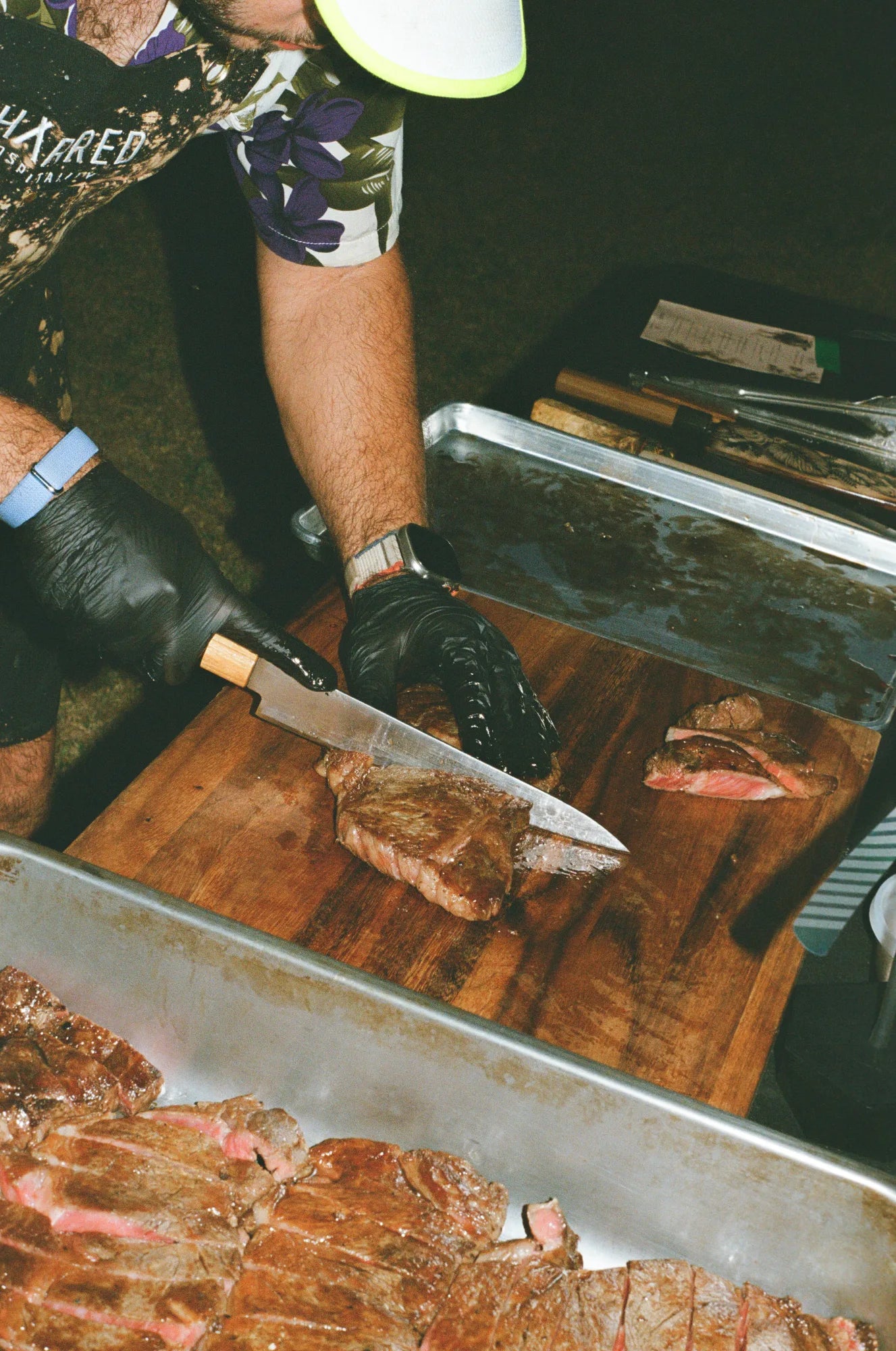
Slicing a grilled NY strip
Takeda Farm · Takemitsu-chan

Hakuundake Medley(白雲岳)

Multi-primal Butcher's box

A butcher's tour across the animal: NY strip, zabuton, boneless short rib and a buttery kaburi rib cap headline, with brisket sankaku, top round and sankaku-bara steaks, premium short-rib karubi for the grill, and two osso buco shanks for the slow cooker.

  • Steak
  • Yakiniku ¼″

What's inside10 cuts · 10.0 lb total

  • rib×4
  • loin×1
  • chuck×2
  • round×1
  • brisket×1
  • shank×1
  • NY Strip Steak

    Striploin · 1″ thick steak

    1 × 1.2 lb

  • Zabuton (Denver) Steak

    Chuck Roll · 1″ thick steak

    1 × 1.0 lb

  • Boneless Short Rib Steak

    Short Rib (Boneless) · 1″ thick steak

    1 × 1.2 lb

  • Kaburi (Rib Cap) Steak

    Ribeye Roll · 1″ thick steak

    1 × 0.4 lb

  • Brisket Sankaku Steak

    Brisket · ¾″ thick steak

    1 × 1.0 lb

  • Top Round Steak

    Top Round (Inside Round) · ¾″ thick steak

    1 × 1.6 lb

  • Sankaku-bara Steak (Chuck Flap)

    Sankaku-bara (Triangle Rib) · 1″ thick steak

    1 × 0.6 lb

  • Short Rib Karubi (Yakiniku Slice)

    Short Rib (Boneless) · ¼″ slices, cut to 1½″ × 2″

    1 × 0.5 lb

  • Boneless Shank (Osso Buco Style)

    Shank (Boneless) · 1½″ thick portions

    2 × 0.9 lb

  • Clod Yakiniku Slice

    Clod (Front Shoulder) · ¼″ slices, cut to 1½″ × 2″

    1 × 0.5 lb

MeetTakemitsu-chan

Takeda Farm · A-4 · Ships nationwide, frozen

Takemitsu-chan (たけみつちゃん) is a Japanese Fullblood Kuroge Wagyu cow raised at Takeda Farm in Asahikawa, Hokkaido. She was fed local Japanese hay (a rarity amongst Wagyu farms, since Japan rarely has the space to grow its own hay) and lived in a spacious barn with the beautiful Daisetsuzan mountain range in the distance.

Meet Takemitsu-chan →

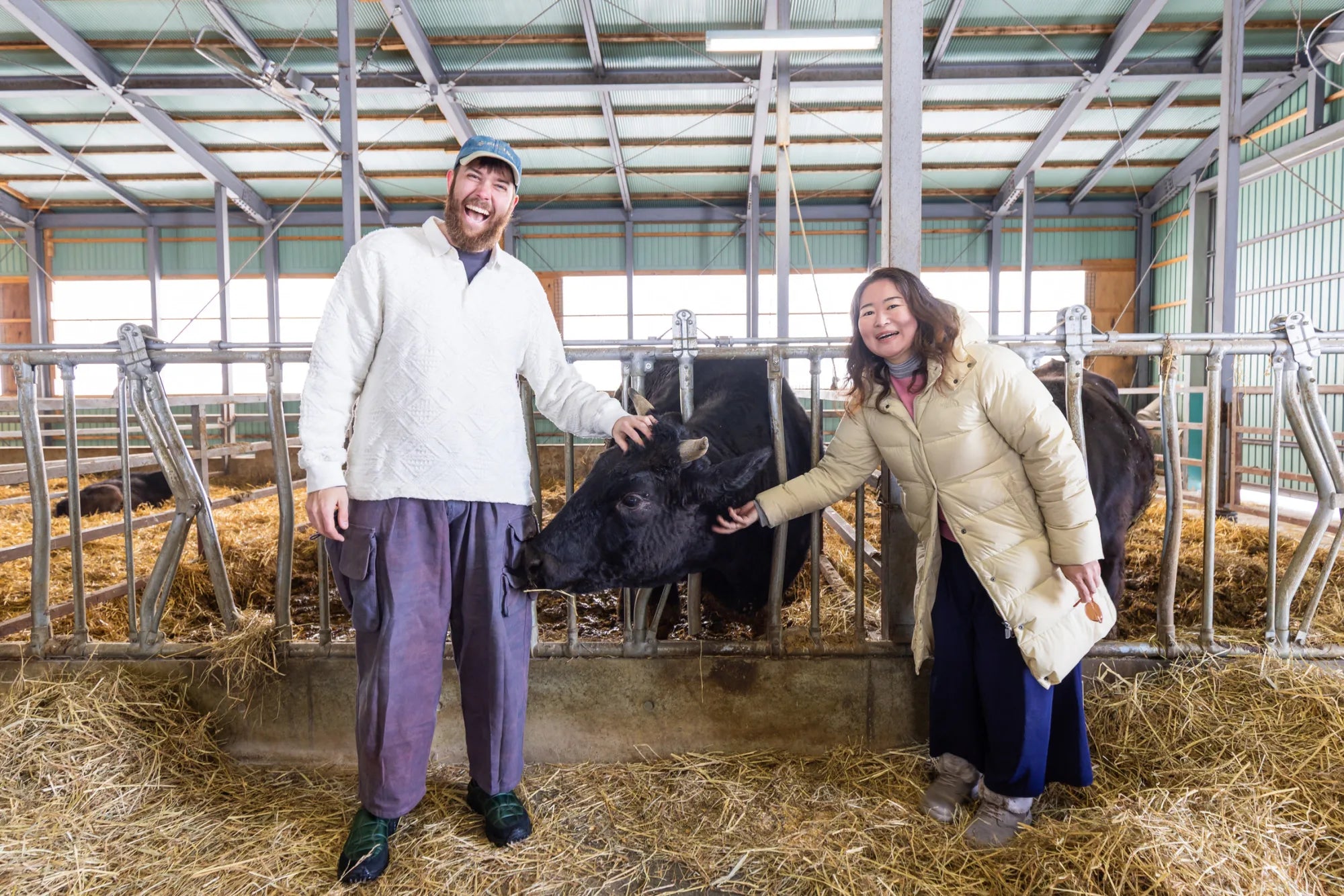
Takemitsu-chan (cow) with Matt (Peak Wagyu) and Ellie Takeda (Takeda Farm)

Matt and Ellie with Takemitsu-chan

Carcass grading

Grade
A-4
BMS
6
Breed
Kuroge Washu (Japanese Black)
Sex
Female
Carcass Weight
468.2 kg
Ribeye area
51 cm²
Rib thickness
7.7 cm
Graded Date
2026-03-02
Graded At
Himeji (JMGA)
Producer
Takeda Co. ((株)タケダ)
Carcass #
3469
Individual ID
1493019197
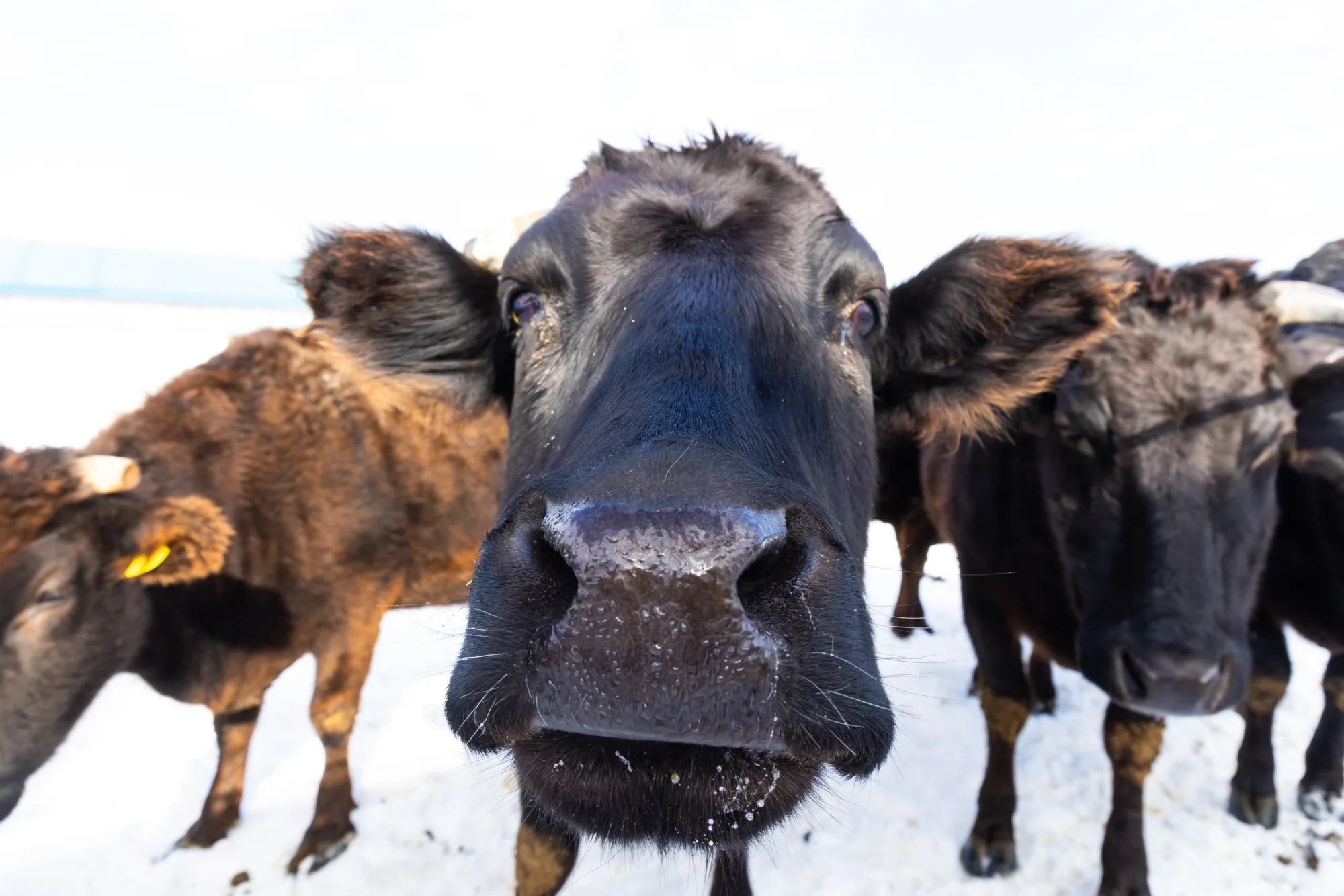
A curious Kuroge Wagyu cow leaning in close, nose to the camera, in the Hokkaido snow
It's sad to think that your cow, that you are raising every day with love, is going to be shipped out; I always cry when the cow goes on the truck. On the other hand, it's a baton. A baton of life from the cow. We each have to eat to live. Even plants, fish, vegetables, they are living. Everything that we eat was living. We receive the baton of life. So we have to live our life to the fullest. Let's be happy that we can eat, and be grateful for all the food, and the people who are raising it. Please think about this as you are eating.
— Ellie Takeda

Takemitsu-chan's NY Strips

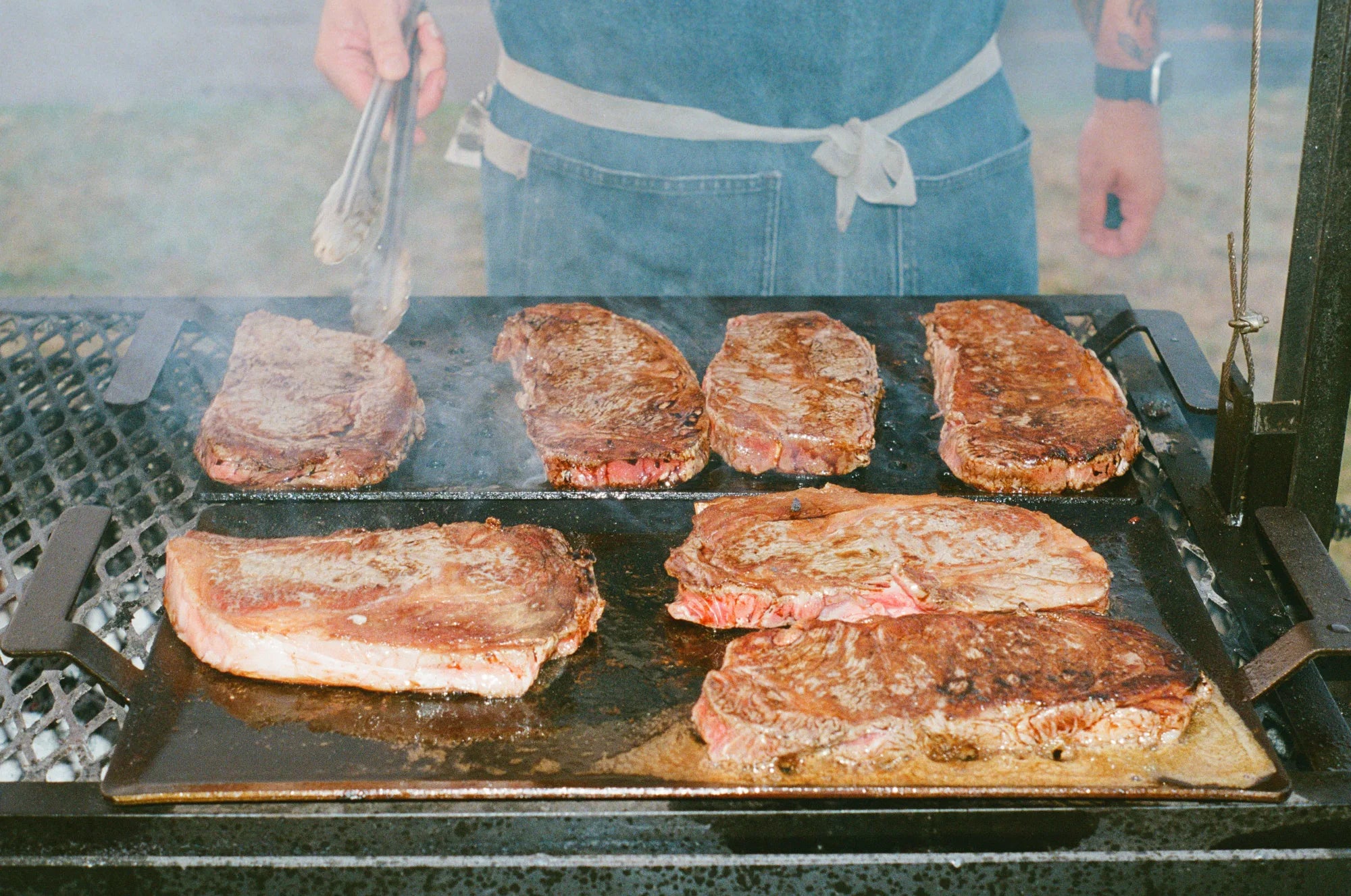
Grilled over live fire at the Peak Wagyu launch dinner
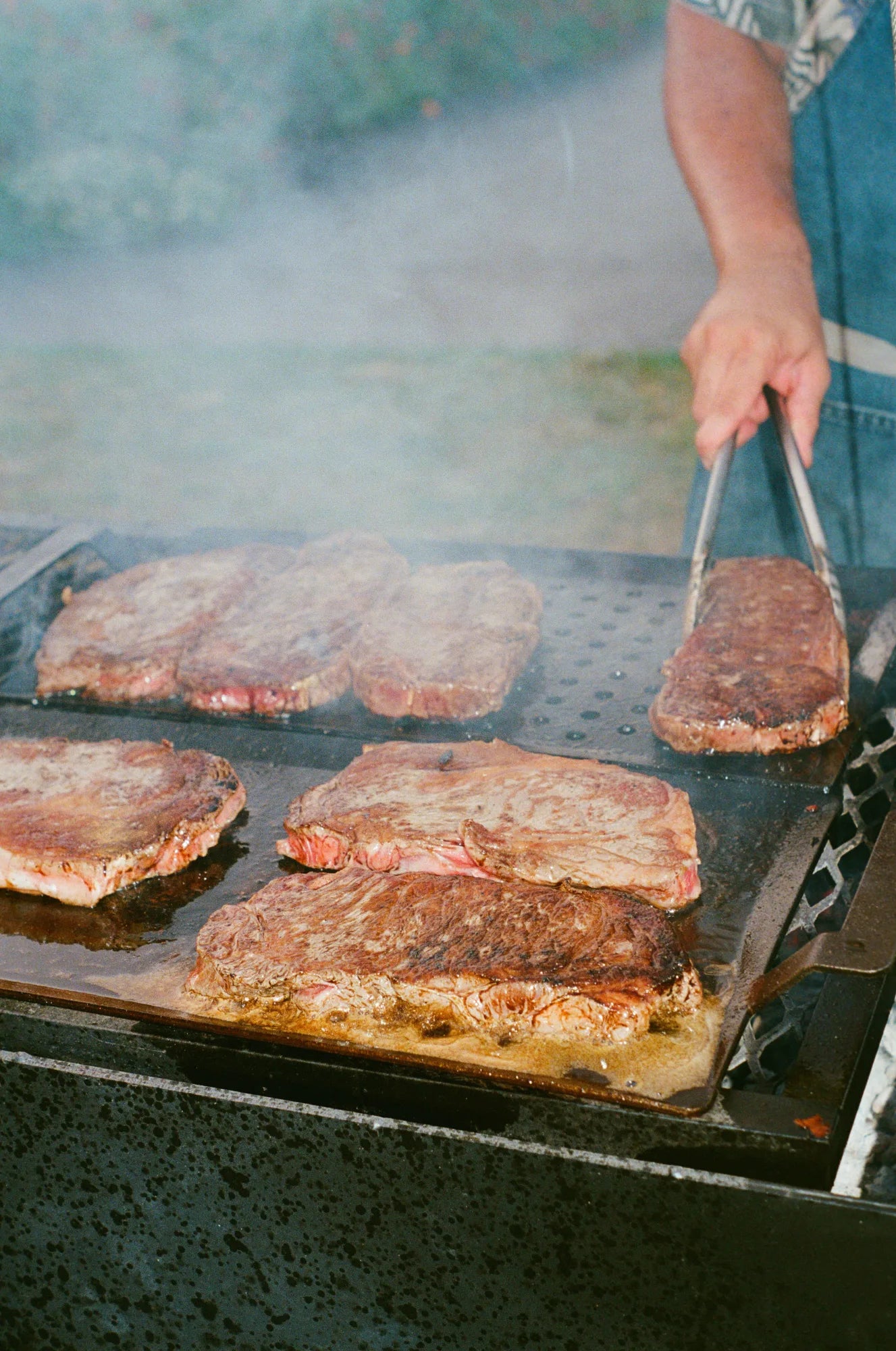
Wagyu steaks searing side by side on a flat-top plancha over open flame, smoke rising
A seared Wagyu steak carved to reveal a rosy, medium-rare interior on a wooden board
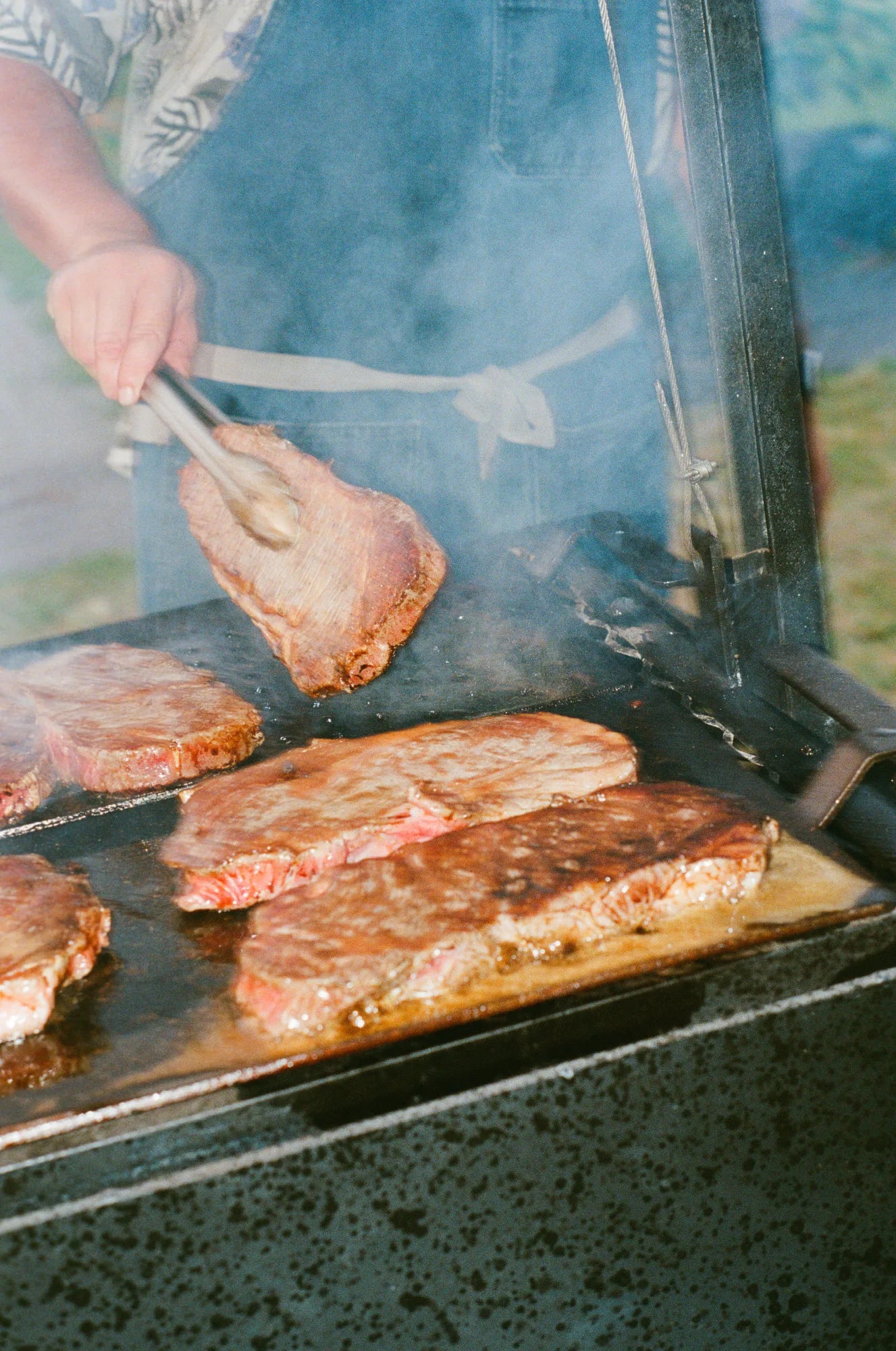
A cook in a denim apron flipping a Wagyu steak over billowing smoke on a live-fire grill
Wagyu steaks searing on a flat-top over open flame, a cook turning one with tongs
TakedaFamily Farm

Takeda Farm sits at the foot of the Daisetsuzan mountain range in Hokkaido. With their 30+ years of experience in Wagyu genetics and the intense winter of Hokkaido, they raise well loved cows and beef of the highest quality.

Takeda Farm's Wagyu

After 30 years of pioneering Wagyu genetics and veterinary practices for farms across Hokkaido, Takeda Farms established their own ranching operation in 2022, and are proud to send their Wagyu off to America, marking the first availability of their beef outside of Japan.
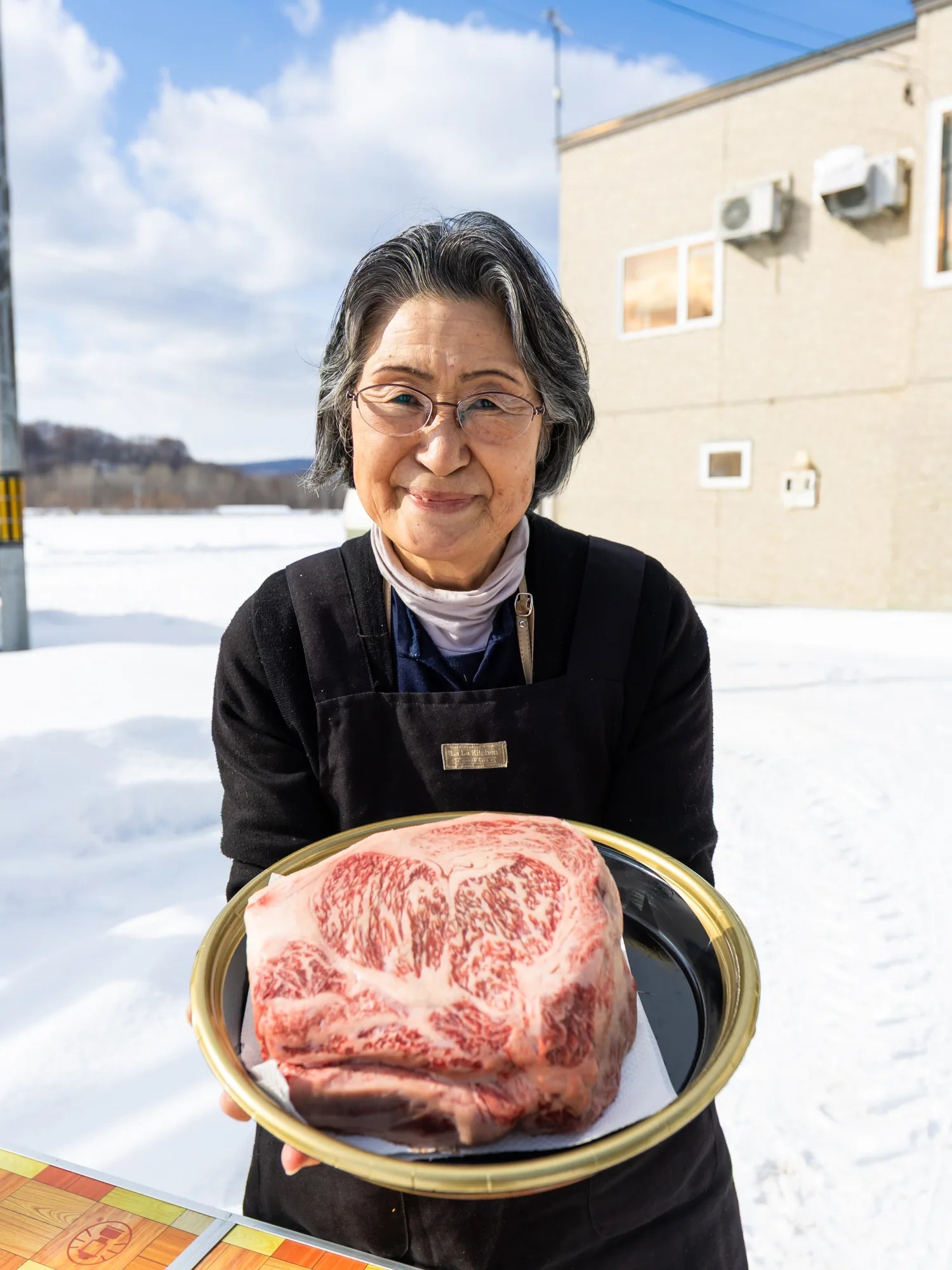
Tomoko-san, a friendly older Japanese woman, presenting the viewer with a beautiful ribeye
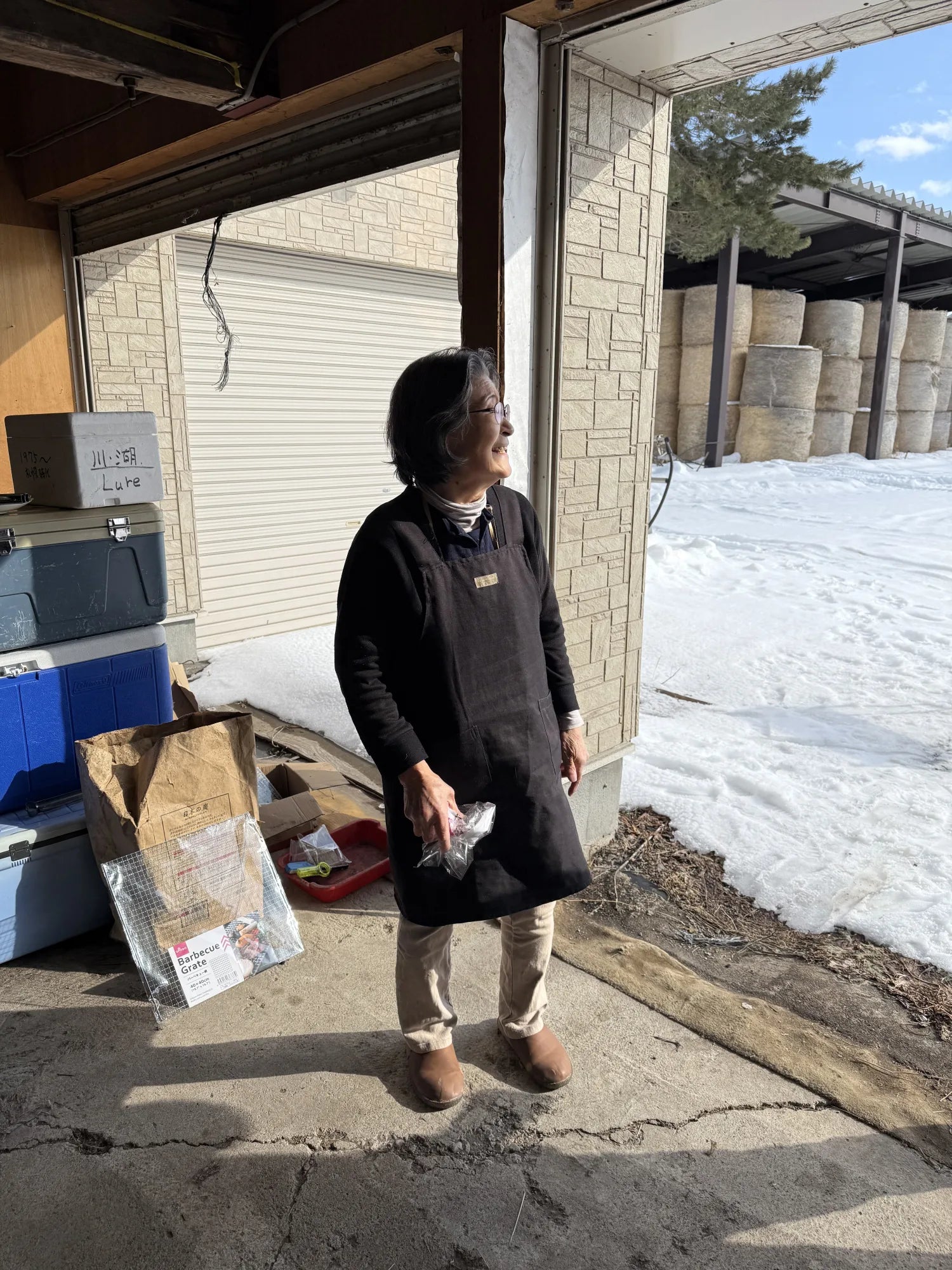
Tomoko-san, a friendly older Japanese woman, looking off to the right
The Batonof Life

Ellie's father, Tetsuo, spent his career teaching Wagyu embryo transfer to farms across Hokkaido before starting his own herd — just six cows — at the base of the Daisetsuzan mountains. He earned his veterinarian's license, raised his family, and built what is now Takeda Farm, one relationship at a time.

He's since passed. Ellie and her mother, Tomoko-san, run the farm together now.

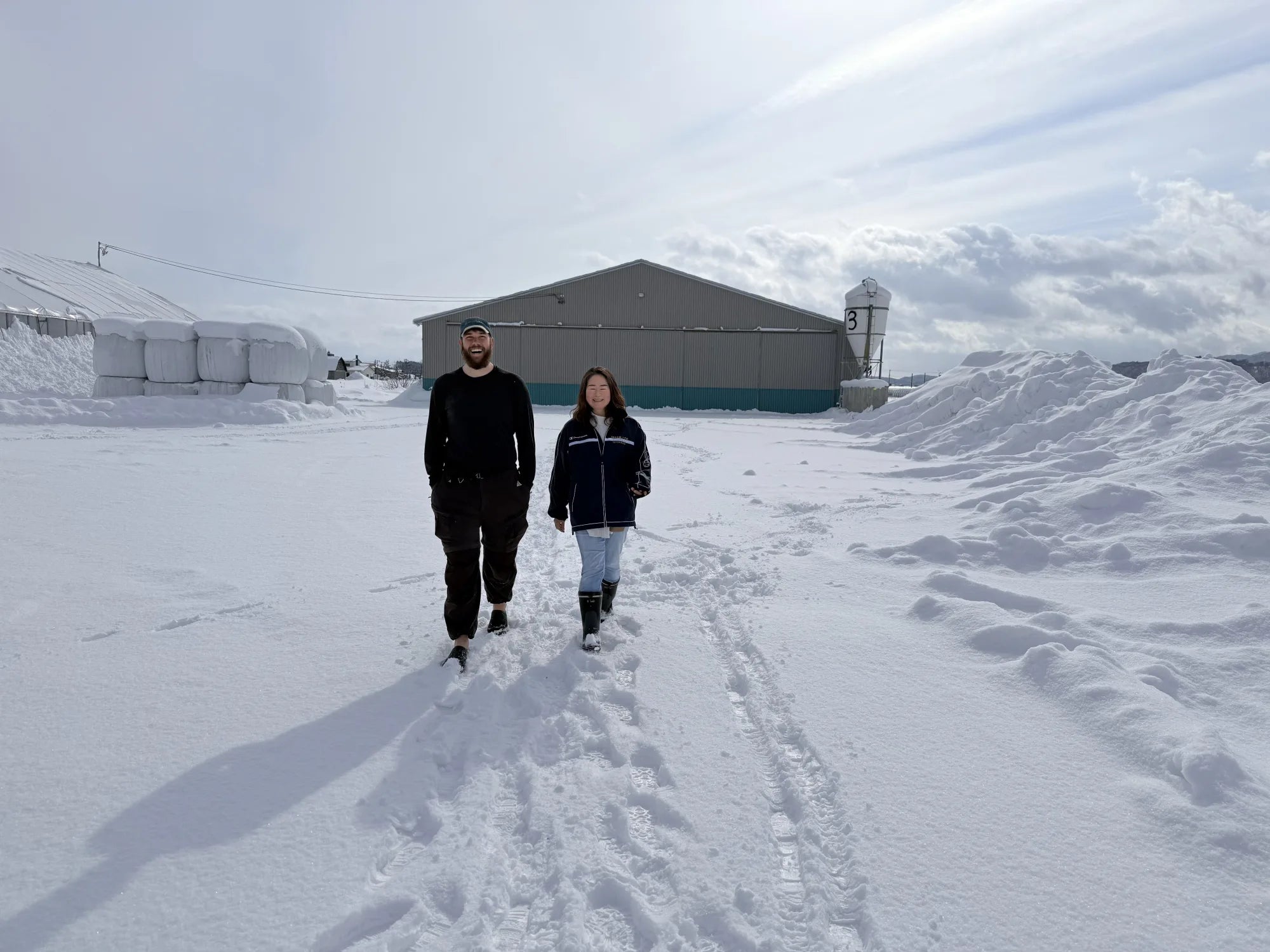
Matt and Ellie Takeda walking together across the snowy farm

Matt and Ellie at the farm

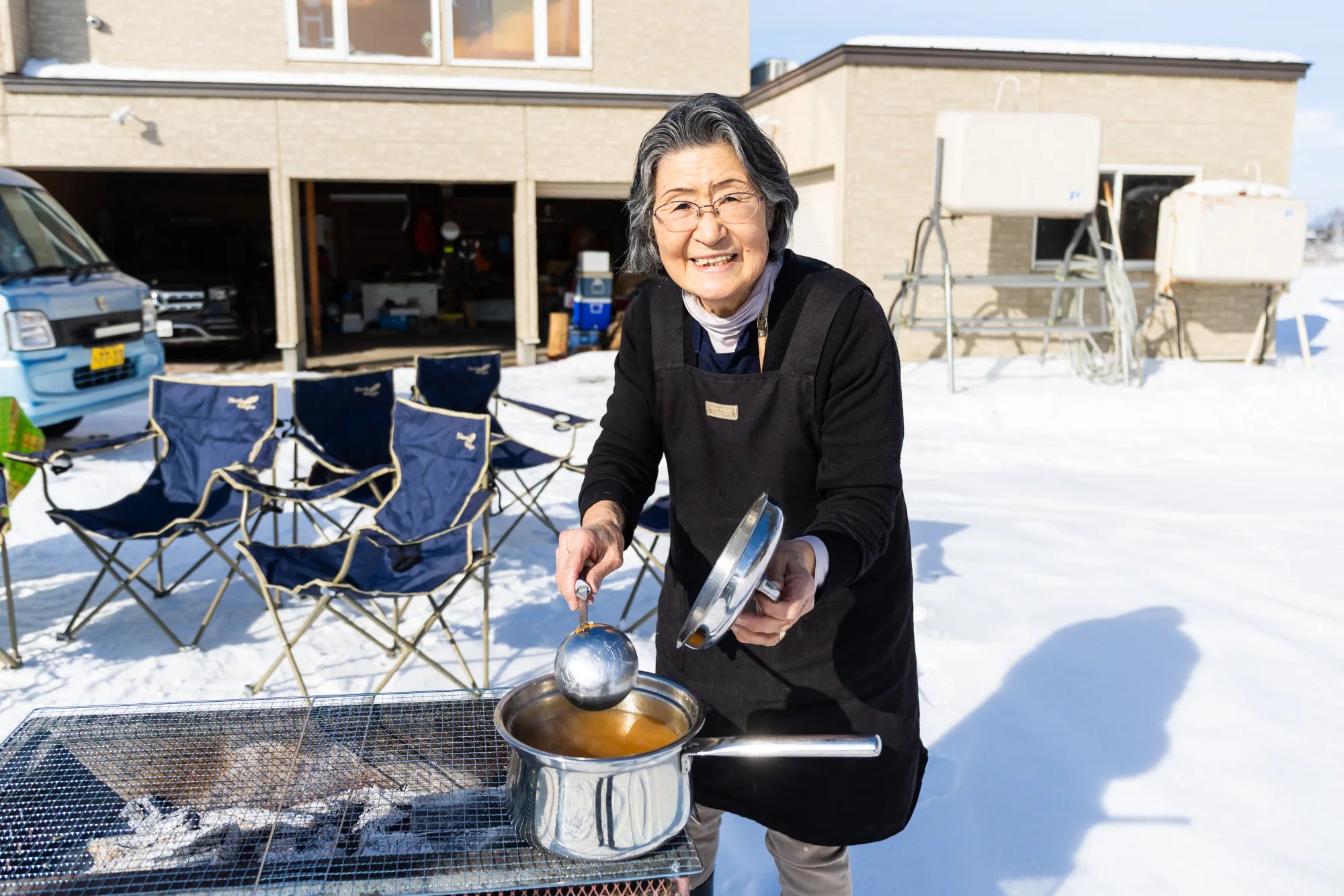
Tomoko-san ladling soup over a charcoal grill in the snow

Tomoko-san, who runs the farm with Ellie

Just like with embryo transfer, my father's work was preserving the cattle's genetics — passing the baton of life. So I want to somehow take that baton from him, and do my best to carry it on to what comes next.
— Ellie Takeda

It's why Ellie says she's stopped apologizing to the animals she raises:

I've stopped saying “I'm sorry” and started saying “thank you.” Receiving a life means passing the baton of life.
— Ellie Takeda
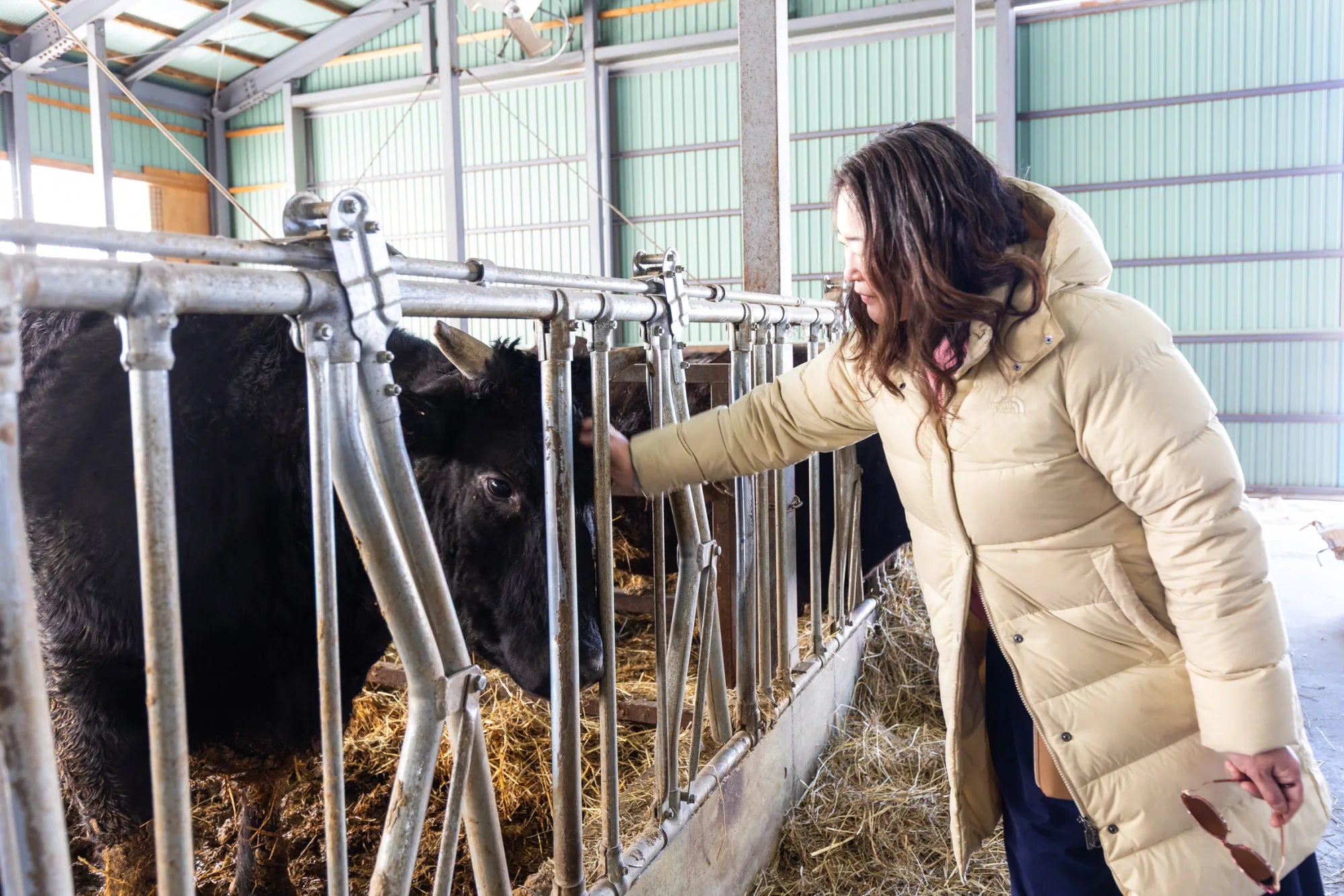
Ellie greeting one of the cows in the barn at Takeda Farm
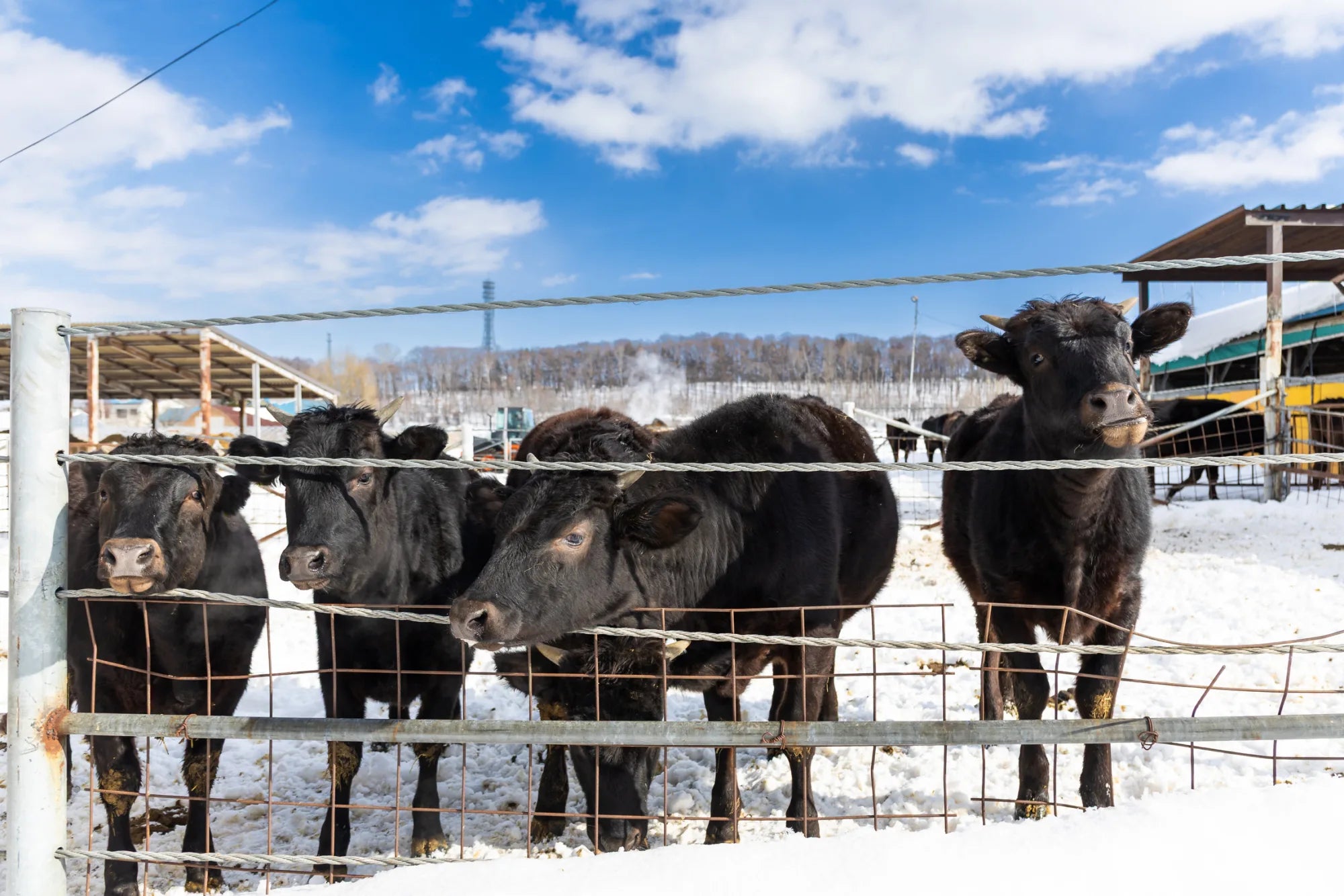
Takeda Farm cows gathered at the fence
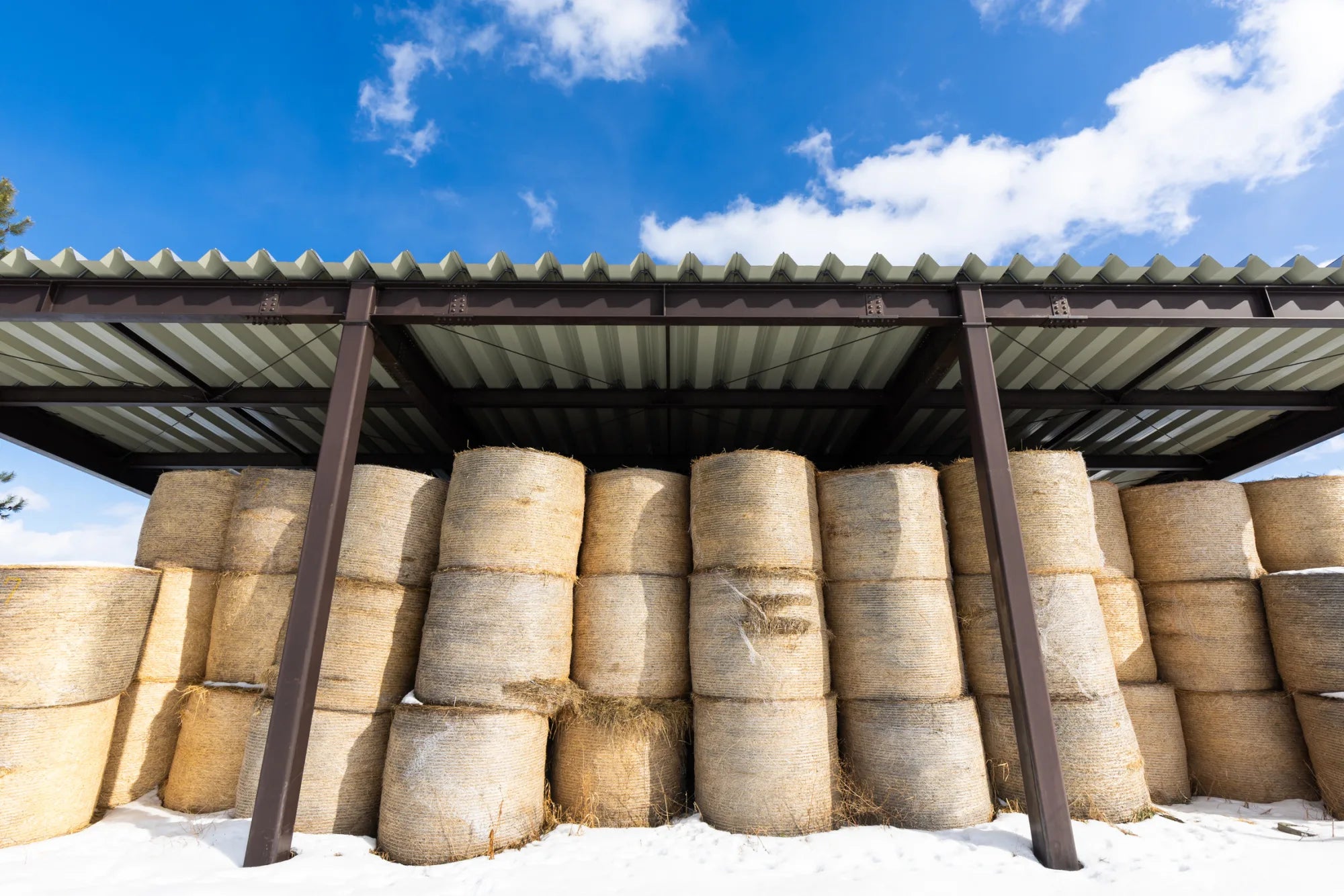
Locally grown Japanese hay, a rarity among Wagyu farms
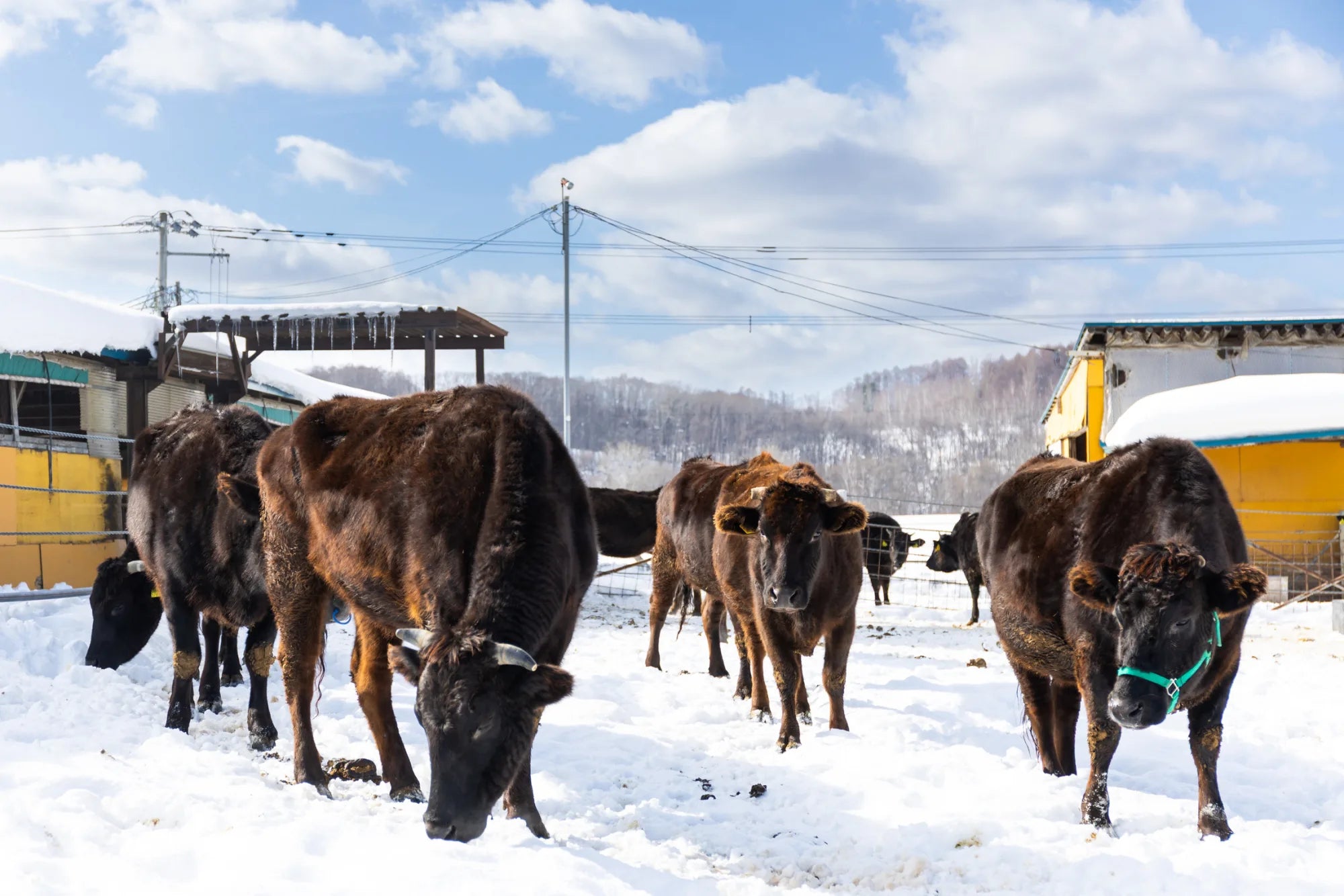
Cows out in the Hokkaido snow through the long winter

Raised with love

Feed
Ellie uses Hokkaido-grown hay, oats, and rice bran from Asahikawa-grown mochi barley. Local hay is rare among Wagyu farms; Japan rarely has the space to grow its own. Ellie calls this the "secret recipe."
Bedding
Hokkaido-grown barley straw.
Water
Snowmelt from the Daisetsuzan mountain range.

Sign up for our moos-letter

Wagyu drops, cooking tips, and the occasional dispatch from Hokkaido.
No spam, just high quality protein.

By subscribing you agree to receive emails from Peak Wagyu. Unsubscribe anytime.

Asahi-dake, the tallest mountain in Hokkaido, which sits behind Takeda farm to the east.