

Peak Wagyu — Japanese Fullblood Wagyu from Hokkaido family farms, sold cut by cut and shipped frozen nationwide.
Fullblood Japanese Wagyufrom a family farm in Hokkaido,delivered to your door.
Meet our cow, Takemitsu-chan
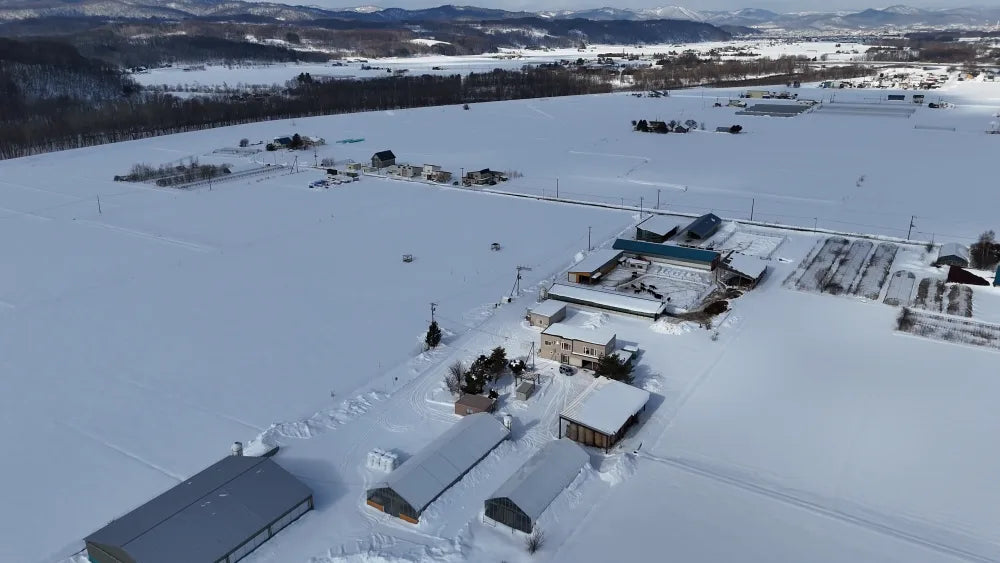
Takemitsu-chan (たけみつちゃん) is a Japanese Fullblood Kuroge Wagyu cow raised at Takeda Farm in Asahikawa, Hokkaido. Takemitsu-chan was fed local Japanese hay (a rarity amongst Wagyu farms, since Japan rarely has the space to grow its own hay) and lived in a spacious barn with the beautiful Daisetsuzan mountain range in the distance.
We know this because we flew out to meet her!


Who is Peak Wagyu
Winter 2023: solo traveler Matt wore sneakers to the Asahikawa Winter Festival, where his feet promptly froze. As he thawed his icy cold feet at the local bus stop, a small Japanese child became curious at these unusually bare feet.
Ellie, the boy's mother, after ensuring Matt and his cold toes were alright, invited this strange, playful foreigner to visit her family's Wagyu farm the following day. Matt never turns down adventure nor gifted meat.
A few years—and many juicy bites of Wagyu later—Matt and his enthusiastic partner Rachel flew out from Texas to Japan to meet and purchase Takemitsu-chan! We spent time with the incredible, knowledgeable people who took the BEST care of Takemitsu-chan and learned an incredible amount.
We're ready and excited to share Takeda Farms' delicious Wagyu with the world!

Matt, in Wagyu heaven

Rachel, in Wagyu heaven

Sharing the first cuts with friends


Wagyu so yummy, but why?
Wagyu's flavor comes down to a few things you can actually measure.
- The marbling
- Wagyu's marbling (sashi) is the direct result of genetics and a feeding program that runs longer than other beef cattle in the world.
- The smell
- Heat Japanese Wagyu to around 176°F (80°C) and it releases a sweet aroma, often described as peach or coconut, that comes from lactones found in no other beef.
- The melt
- Roughly half of Wagyu's fat is oleic acid—the same fat that makes olive oil good for you—and it melts at 64-80°F (18-27°C), close to body temperature, which is the physical reason it dissolves on your tongue.
From Japan to your door